


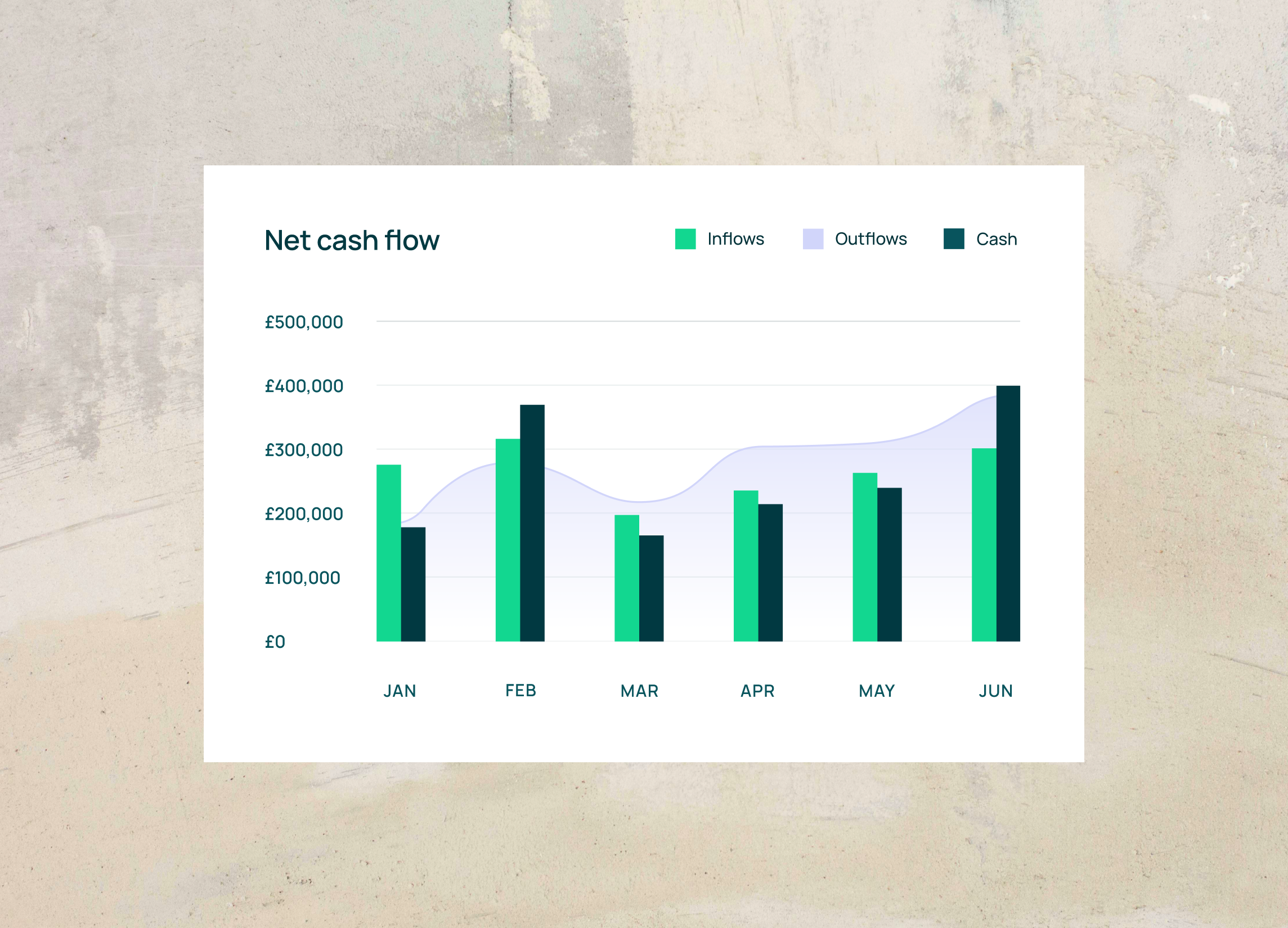

For consumer brands managing large inventory orders or long invoice payment terms, cashflow is rarely smooth. Revenue comes in waves. Costs go out in advance. The gap between the two is where growth either accelerates or stalls.
A revolving credit facility is one of the most practical tools available for bridging that gap. It is not a term loan, not an overdraft, and not a one-off injection of capital. It is a pre-approved credit limit that a business can draw from, repay, and draw again — without reapplying each time. Used correctly, it functions as a working capital tool that moves with your business rather than against it.
What is a revolving credit facility?
A revolving credit facility is a flexible credit arrangement between a lender and a business. The lender approves a maximum credit limit. The business can draw funds up to that limit at any time, repay them, and draw again — paying interest or fees only on the amount actually used, not the total facility.
Unlike a term loan, where the full amount is received upfront and repaid on a fixed schedule, a revolving credit facility gives the business control over timing. The capital is there when it is needed and dormant when it is not.
How does a revolving credit facility work?
The mechanics are straightforward. A lender agrees to a credit limit — say £150,000. The business draws £60,000 to fund an inventory order. Fees are charged on the £60,000 drawn, not on the remaining £90,000. When the business repays the £60,000, the full £150,000 becomes available again. The cycle repeats as many times as needed within the agreed term.
This draw-repay-redraw structure is what makes the facility useful for businesses with recurring working capital needs, as the British Business Bank describes it, rather than one-off funding requirements.
How is it different from a term loan?
A term loan provides a fixed lump sum. Repayments begin immediately, on a set schedule, regardless of how the business is performing month to month. Once the loan is repaid, the arrangement ends.
A revolving credit facility is designed differently. It is a tool for ongoing use. The available balance resets with each repayment. There is no fixed end date on what can be drawn, provided the business remains within its agreed terms. For consumer brands with lumpy cashflow — where costs go out in advance of sales coming in — that ongoing availability matters considerably more than a one-time capital injection.
The benefits of a revolving credit facility for consumer brands
Flexible credit that moves with your cashflow
Consumer brands rarely operate in straight lines. A seasonal peak requires more stock in one month than another. A retail order lands unexpectedly. A supplier demands early payment to secure allocation. A revolving credit facility is designed for exactly this kind of variability. Funds can be drawn when needed and repaid as sales come in, without needing to justify the draw each time or wait for a new application to be processed.
This flexibility is particularly valuable for brands managing large inventory purchases or extended invoice payment cycles — two cashflow patterns that routinely outpace what retained earnings alone can cover.
Only pay for what you use
One of the more underappreciated advantages is the cost structure. Fees are charged only on the amount drawn and only for the period it is outstanding. The undrawn portion of the facility sits available without generating the same interest cost as a term loan would on its full principal.
This makes a revolving credit facility capital efficient for businesses that do not need consistent access to the full limit. A brand drawing £50,000 one month and £120,000 the next only pays for what they actually used.
A working capital tool, not a one-off fix
Strong brands use a revolving credit facility the way a financial team uses a cashflow forecast: as an ongoing instrument. It is not deployed in a crisis. It is structured into the cashflow model from the start, available when the gap between outgoing costs and incoming revenue widens. This removes the pressure of reactive fundraising and gives founders and finance teams a reliable lever to pull at predictable points in the trading cycle.
For brands scaling into retail or adding new product lines, it can also free up existing cash for reinvestment into marketing and acquisition, rather than locking it all into stock.
When does a revolving credit facility make sense?
Buying inventory ahead of your peak season
Seasonal consumer brands face a specific cashflow problem: they must commit capital months before the revenue arrives. Miss the stocking window and you miss the season. There is rarely a second chance within the same trading year.
Rippl Impact Gear, a motorcycle apparel brand funded through Triffin, described this tension clearly. Their product is inherently seasonal, with peak demand in spring and summer. Stocking decisions had to be made months in advance, and falling short of stock mid-season meant not just lost sales but a wait of a full year before the next opportunity to recover. A revolving credit facility allowed them to commit to inventory — including expanding into a second product line — without relying on retained earnings alone to fund timing they could not control.
For brands in fashion, outdoor goods, gifting, or any category with defined sales peaks, the same logic applies. The capital needs to be in place before the season begins, not once it is already underway. Triffin's inventory finance is built specifically for this pattern.
Bridging the gap between shipping and getting paid
Retail expansion creates a well-documented cashflow problem. Brands sell at lower margin per unit, wait 30 to 60 days for payment, and often have production lead times of two months or more. The total gap between spending and receiving can stretch to four months or longer.
Azio Beauty, a cosmetics brand sourcing from Korean suppliers, described the maths of this. Growing at pace required external capital not because the business was unprofitable, but because the cash cycles between production, shipping, delivery, and payment were simply too long for retained earnings to bridge. A revolving credit facility gave them the ability to fund inventory commitments and free up their own cash for marketing reinvestment.
This use case — funding the working capital gap created by retail expansion — is one of the clearest applications of flexible credit. Triffin's invoice finance addresses the same challenge from the receivables side.
Growing faster than retained earnings allow
For brands on aggressive growth trajectories, the constraint is often timing rather than profitability. Revenue is growing, but the cash to fund the next inventory order must be committed before the previous batch has fully converted to sales.
An e-commerce wellness brand working with Triffin, experienced 1,300% year-on-year revenue growth at the point of using revolving credit. The facility covered the inventory piece of the growth plan, which freed their own cash to be deployed into paid acquisition and site performance — the two pillars of DTC growth. Rather than competing for the same pool of capital, the two functions could operate independently.
These are the situations where a revolving credit facility performs well: recurring cashflow needs, a clear repayment cycle tied to revenue, and a business model where stock converts to cash predictably.
When a revolving credit facility does not suit your business
A revolving credit facility is a short-term working capital tool. It is not a solution for every funding need, and using it outside its intended purpose increases both cost and risk.
Is a revolving credit facility right for long-term capital investment?
No. A revolving credit facility is poorly suited to large, one-off capital purchases — equipment, property, long-life assets, or significant R&D investment. These decisions require funding structures with longer time horizons and fixed repayment terms that match the asset's useful life, as Allica Bank notes. Trying to finance a long-term asset through a short-term revolving facility creates a mismatch between the repayment cycle and the return timeline, which puts cashflow under pressure.
If the need is capital investment rather than working capital, a term loan or asset finance is likely the more appropriate structure.
Businesses with unpredictable or irregular revenue
A revolving credit facility works on an assumption: that the business draws capital, generates revenue, repays, and repeats. When revenue is unpredictable or inconsistent, that cycle breaks down. The facility becomes harder to manage, interest accumulates, and the credit limit can feel more like a ceiling than a resource.
Consumer brands at very early stage, pre-revenue, or in a significant business model transition may find that the structure of a revolving credit facility does not align with their cashflow reality. In those situations, the discipline required to use the facility well — drawing only what can be clearly repaid within a defined cycle — is difficult to apply.
It is also worth noting that revolving credit facilities typically carry higher interest rates than secured term loans, given their flexible and often unsecured nature. There are also fees to factor in: arrangement fees on setup, and in some cases commitment fees on the undrawn portion. These costs are manageable when the facility is actively and efficiently used, but become a drag when it sits largely unused or is drawn beyond what revenue can comfortably repay.
What does a revolving credit facility typically cost?
Interest on the drawn balance
Interest is calculated on the amount drawn and the period it is outstanding. Rates vary by lender, security, and the financial profile of the business. The key point is that interest does not accrue on the undrawn portion of the facility in the same way it would on a term loan's full principal. That said, rates on revolving credit tend to be higher than secured alternatives, reflecting the flexibility and accessibility of the product.
Fees to know about
Beyond interest, consumer brands should account for arrangement fees charged at setup, and potential commitment fees on any undrawn balance. Some lenders apply these; others do not. Reviewing the full cost structure — not just the headline interest rate — is important before committing to any facility. As Funding Options sets out, the available limit, ease of use, and lender relationship all matter alongside the rate itself.
Is a revolving credit facility right for your brand?
The answer comes down to how cash actually moves through your business.
If your costs go out ahead of revenue — whether through inventory purchases, supplier payments, or the working capital gap created by retail payment terms — a revolving credit facility gives you control over that timing. It lets you draw when needed, repay as sales come in, and repeat the cycle without reapplying.
If your funding need is a large one-off investment with a long payback horizon, or your revenue is too unpredictable to support a clear repayment cycle, other structures are likely a better fit. Explore seven cashflow strategies for scaling consumer brands and why seasonality planning can make or break your cashflow for further context on how brands approach working capital decisions across different growth stages.
Triffin's revolving credit facility is built specifically for consumer brands, combining inventory finance and invoice finance in a single facility. If you are at the point where working capital is the constraint on your next stage of growth, it is worth understanding how the structure works in practice.


.png)