


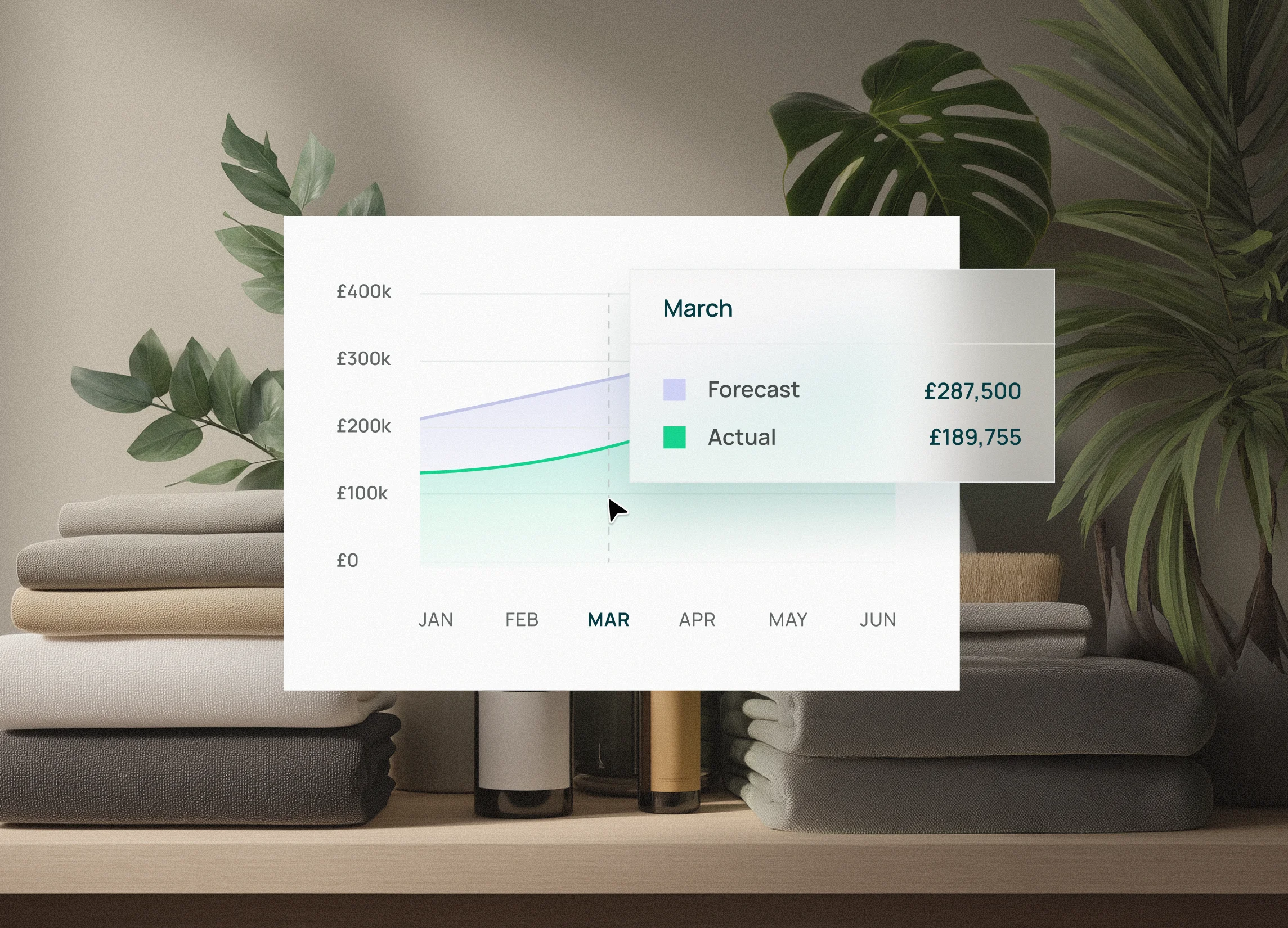

Sales are up. Orders are growing. So, why is the bank account empty?
This is one of the most common — and most damaging — experiences for scaling consumer brands. Growth does not just cost money. It consumes it, often faster than revenue can replenish it. The businesses that navigate this well are not necessarily the ones growing fastest. They are the ones who understand what is actually happening to their cash at every stage of that growth.
For consumer brands sitting between £1m and £20m in revenue, this challenge is particularly acute. Too big to operate on instinct, too small for a full internal finance team. The working capital demands of new channels, new product lines, and longer retail payment cycles create pressure that income statements simply do not reveal.
The seven cash flow patterns below are not edge cases. They appear consistently across scaling consumer brands. Understanding them — and building systems to manage them — is what separates brands that scale sustainably from those that run out of road at exactly the wrong moment.
1. Understand your true operating cash flow
Every effective cash flow forecast starts with a clear-eyed view of operating cash flow: the actual cash generated by the core business, not accounting profit.
These two numbers diverge significantly during periods of growth. A brand can report strong revenue and healthy margins while simultaneously draining cash — because growth requires inventory investment, extended supplier payments, and working capital deployment that accounting profit does not capture.
How to calculate your cash runway
If operating cash flow is negative or tightening, the first calculation to run is cash runway:
Runway = Current Cash Reserves ÷ Monthly Cash Burn
This single metric tells you how long the business can operate before requiring new capital. It should inform every decision about growth pace, hiring, and funding — and it should be reviewed monthly, not quarterly.
Consumer brands that lose control of cash flow rarely see it coming in one moment. It builds gradually through a series of individually reasonable decisions: a new product launch here, a retailer listing there, a delayed payment from a wholesale partner. Operating cash flow visibility is what allows those signals to be caught early.
2. The working capital trap every growing brand falls into
More sales can mean less cash — at least temporarily. This is the working capital trap, and it catches consumer brands at the moment they feel most confident.
Scaling into new retail channels or launching additional SKUs requires higher inventory levels before the revenue from those SKUs materialises. A 50% increase in sales targets will likely require a greater increase in stock commitments. Every unit of unsold inventory is cash that cannot be deployed elsewhere.
Adaptolatte, the DTC mushroom coffee brand, experienced this directly. When their credit facility was cut overnight, their inventory funding model collapsed instantly — not because the business was failing, but because their working capital had become dependent on a single source with no notice period. They moved to a revolving credit facility to fund inventory across new product lines, including decaf and matcha, without relying on equity or fixed-term debt products.
What drives the working capital gap at scale?
The working capital gap widens when inventory investment runs ahead of cash collection. Three operational patterns drive this:
- Committing to stock volumes before confirming sell-through rates in new channels
- Supplier payment terms that are shorter than customer payment terms
- Inventory buffers built for growth targets rather than confirmed orders
Modelling inventory requirements before committing to growth targets — and negotiating supplier payment terms that align with the actual sales cycle — closes the gap before it opens. Inventory finance can also bridge the period between stock commitment and cash receipt, allowing consumer brands to take on growth without depleting working capital reserves.
3. How to stop receivables eating your cash flow
Rising receivables signal growth. They also signal cash the business has not yet collected. For consumer brands selling into retail on 60 to 120-day payment terms while paying suppliers in 30 days, this gap is not an accounting nuance — it is a structural cash flow problem.
Research from QuickBooks UK found that three in five UK small businesses are currently owed money in unpaid invoices, with the average amount outstanding sitting at £21,400. A 2025 report commissioned by the Federation of Small Businesses through GoCardless found that 45% of SMBs are experiencing more late payments than twelve months ago, with nearly a quarter receiving payments up to 60 days beyond agreed terms.
What payment terms do UK retailers typically impose?
Standard retail payment terms in the UK range from 30 to 90 days, with some larger retailers operating on 120-day cycles. For consumer brands with Korean or Asian suppliers — where full upfront payment is common — the cash cycle between outlay and receipt can stretch to four months or more.
Azio Beauty, a cosmetics brand sourcing from Korean suppliers, described this as a pure mathematics problem. To grow at 5 to 6% per month, the cash generated by existing revenue was not sufficient to fund the increasing inventory demand. A 2.5-month production lead time combined with 30 to 60-day retail payment terms created a cash cycle of up to 4 months between spend and receipt. Even the decision between air and sea freight was a cash flow decision: air freight cost roughly 55p per unit, sea freight 3 to 4p — but sea freight added another month to the cycle.
To tighten receivables without damaging retailer relationships:
- Implement consistent accounts receivable processes with automated reminders
- Offer structured early payment discounts — JPMorgan's analysis of payment terms notes that a 2% discount for payment within 10 days is a widely used and effective mechanism
- Consider invoice finance to convert outstanding retail and wholesale invoices into immediate working capital, rather than waiting on payment cycles that compress cash flow at scale
4. The cash conversion cycle: The most underused metric in consumer goods
The cash conversion cycle (CCC) measures how long cash stays locked inside operations. It is arguably the most important working capital metric for consumer brands and one of the least consistently tracked.
CCC = Days Inventory Outstanding + Days Sales Outstanding − Days Payable Outstanding
According to Investopedia's breakdown of the cash conversion cycle, a falling or stable CCC is a positive operational signal, while a rising CCC requires closer investigation — it typically indicates that cash is being locked up for longer at each stage of the cycle.
How to calculate and use your Cash Conversion Cycle
Klipfolio's benchmarking data provides a useful reference point: a CCC under 30 days is considered optimal, 30 to 60 days is average, and above 60 days suggests meaningful room to improve working capital management.
For consumer packaged goods brands, a CCC of 30 to 90 days is typical — driven by the combination of production lead times, inventory holding periods, and retail payment cycles. A 60-day CCC on a cost base of £100,000 per month means approximately £200,000 is permanently tied up in working capital just to sustain operations at current scale.
Reducing the CCC without raising capital is possible through three levers:
- Sell faster — improve demand forecasting to reduce days inventory outstanding
- Collect quicker — tighten invoicing and payment processes to reduce days sales outstanding
- Pay slower — negotiate extended supplier terms to increase days payable outstanding
Each lever reduces the amount of working capital permanently consumed by operations. For consumer brands scaling quickly, even a 10-day improvement in CCC can meaningfully reduce the external capital required to fund that growth.
5. Why new product development costs more than founders expect
New product development (NPD) is necessary for consumer brand growth. It is also one of the most consistently underestimated cash flow events in the business calendar.
The visible costs — R&D, tooling, production — are only part of the picture. The full cash impact includes packaging minimum order quantities (MOQs), pre-launch marketing investment, management time diverted from existing lines, and the write-off risk for SKUs that do not reach commercial viability. None of these appear neatly in an NPD budget.
How to account for NPD in your cash flow forecast
A realistic cash flow forecast for any new product should model:
- The full inventory commitment required to reach MOQ thresholds
- Time from first production payment to first sale — which for physical goods with overseas manufacturing is often three to five months
- The probability-weighted cost of a partial or full write-off if sell-through is slower than expected
- The opportunity cost of management time and working capital that cannot be deployed elsewhere during the launch window
Seasonality compounds this further. Consumer brands that launch new products ahead of peak trading windows — without adequate cash runway to bridge the pre-revenue period — find themselves either underfunded at the moment of highest demand or forced to curtail the launch to preserve cash. The relationship between NPD timing and seasonal cash flow planning deserves more attention than most brands give it.
6. Scaling into new channels without wrecking your working capital
International expansion and retail channel growth look attractive on a revenue plan. They are significantly more complex on a cash flow statement.
Each new market or channel introduces its own payment culture, logistics cost structure, VAT obligations, and currency exposure. Retail expansion in particular typically requires brands to carry more inventory, accept longer payment terms, and absorb the cost of compliance, listing fees, and promotional spend — all before a single unit is sold through.
What financial expertise do you need before expanding into retail?
Consumer brands that scale into retail successfully share one consistent characteristic: they model the working capital requirement of that expansion before committing to it, not after.
This means understanding the difference between gross margin and cash margin in a retail context. A product with a 60% DTC margin might operate at 35% gross margin in retail, and negative cash margin in the first season once inventory commitment, returns provision, and payment terms are factored in. For brands weighing the trade-offs between debt and equity as they fund that expansion, Triffin's guide to debt vs equity funding decisions covers the considerations that matter at this stage.
The strongest consumer brands either hire financial expertise with direct retail scaling experience or engage advisors who have navigated these cash flow challenges before committing capital. The cost of that guidance is modest relative to the cost of the mistakes it prevents.
7. How to model customer acquisition economics accurately
Misreading customer acquisition economics is one of the most common and most damaging cash flow errors in scaling consumer brands. The problem is not usually the CAC number itself. It is the absence of the full model around it.
CAC in isolation is a vanity metric. What matters is the relationship between CAC, gross margin, and customer lifetime value — and how long the cash cycle is between acquisition spend and the point at which a customer becomes profitable.
Is your CAC sustainable? The cash breakeven test
A worked example: if acquiring a customer costs £50 and the first purchase generates £100 in revenue at a 40% gross margin, the gross profit on that purchase is £40. The first transaction loses £10. That model is only sustainable if the customer returns quickly enough — and frequently enough — for cumulative gross profit to cross the cash breakeven threshold before working capital runs dry.
The calculation consumer brands need to run is not "what is my LTV to CAC ratio" but "at what retention rate and repurchase frequency does this cohort become cash-positive, and how much working capital do I need to fund the acquisition spend in the meantime?"
This connects directly to the broader point about silent killers of consumer brand growth: the metrics that look healthy on a dashboard can mask a cash flow structure that is quietly draining the business. Building a clear model of cash breakeven by cohort — factoring in retention rate, average order value, and gross margin — is one of the highest-value financial exercises a scaling consumer brand can run.
Get on top of your cash flow forecasting with Triffin
Cash flow forecasting is not accounting administration. For consumer brands at scale, it is a strategic capability.
The most resilient consumer brands consistently do four things:
- They know their cash runway before they need it
- They model working capital requirements alongside revenue targets, not separately
- They manage the cash conversion cycle as tightly as their sales pipeline
- They build customer acquisition models around cash breakeven, not just LTV ratios
Growth is expensive. The brands that sustain it are not those that grow fastest — they are the ones that see the cash implications of each decision early enough to act on them.
That is where Triffin's revolving credit facility comes in. Designed specifically for the realities of scaling consumer brands, it provides flexible working capital that aligns with your actual cash flow cycle — whether that is funding inventory ahead of a major retail listing, bridging long wholesale payment terms, or supporting a new product launch without drawing down equity. If you want to understand how Triffin could support your cash flow, get in touch with the team.
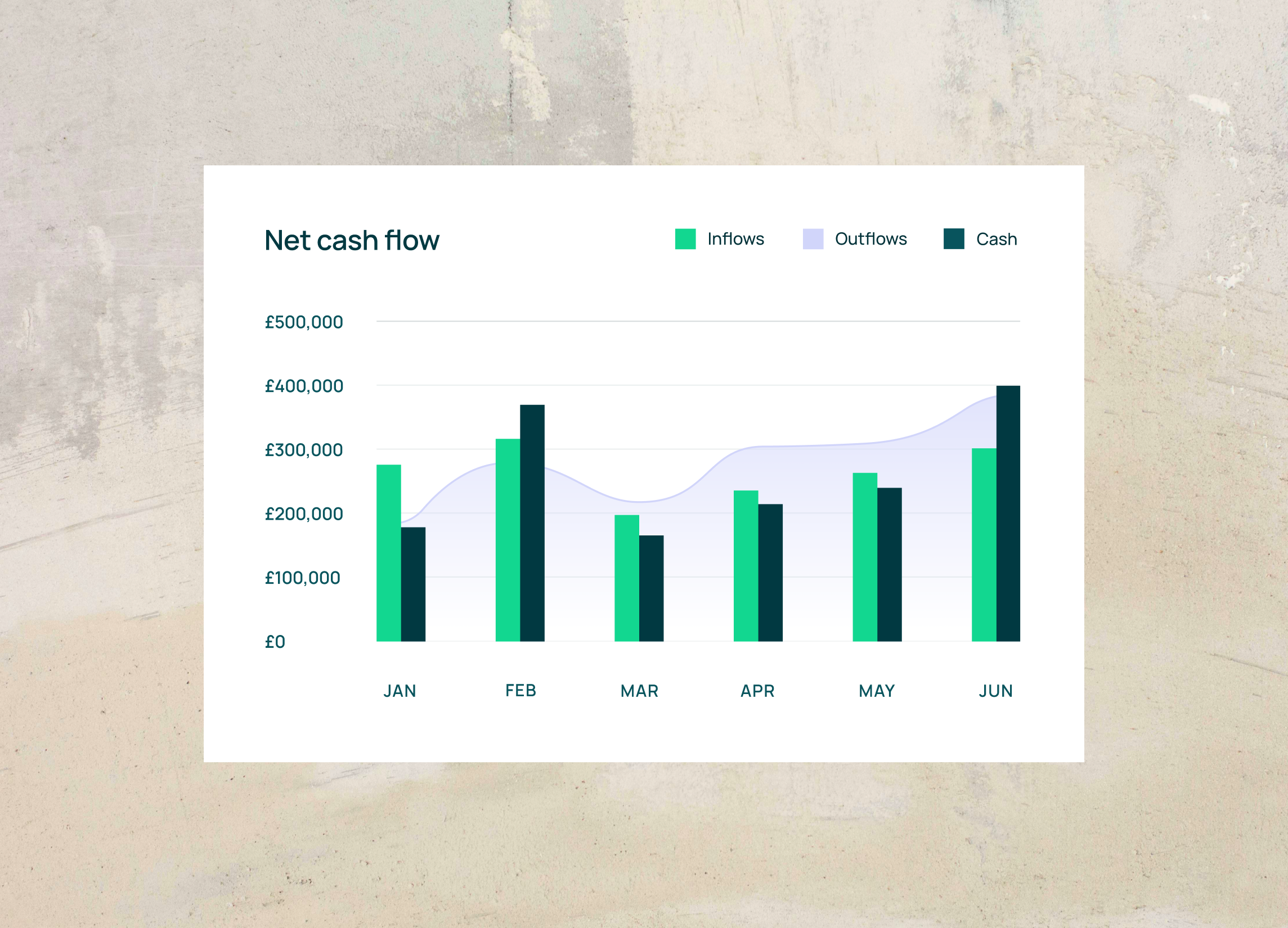


.png)