

.png)

Your agency says scale the ads, your finance team says slow down. Both are looking at the same business but both are looking at completely different numbers.
This tension exists inside almost every scaling consumer brand. Marketing sees growth through CAC, ROAS, and revenue. Finance sees the business through margin, cash flow, and working capital.
When those two worlds don't connect, brands make expensive decisions. When they do connect, brands scale faster and more efficiently. The most successful brands aren't just good at marketing or finance. They're great at the intersection of both.
The agencies and advisors worth working with operate there too, not just reporting numbers back to whichever team wants to hear them. A 3x ROAS on a 70% margin product is a genuinely profitable outcome. The same 3x on a 35% margin product is a loss after overheads. Context, not the metric itself, is what makes the number useful.
The illusion of "profitable growth"
Marketing dashboards can make almost any campaign look successful. A campaign showing 3x ROAS might seem like a win, but finance tells a different story.
Let's say a brand sells a £100 product:
- Gross margin: 50%
- Contribution margin after fulfilment and fees: 35%
- CAC: £40
On paper revenue = £100, marketing cost = £40. It looks profitable.
In reality: contribution margin = £35, CAC = £40. You just lost £5 on the order.
Many brands don't discover this until months later when cash suddenly gets tight.
This happens because marketing optimises revenue, while finance optimises profitability and liquidity. Until those two perspectives merge, the business is flying blind.
Contribution margin as a blended number is a starting point, not an endpoint. Run a product range with varying margins and that average can mask an entry product that's deeply loss-making at current CAC, quietly offset by a hero product carrying the whole account. Half the spend prints money, the other half destroys it, and the blended figure tells you everything is fine. The real decisions live at product level, not brand level.
The growth paradox: Why marketing success can destroy cash flow
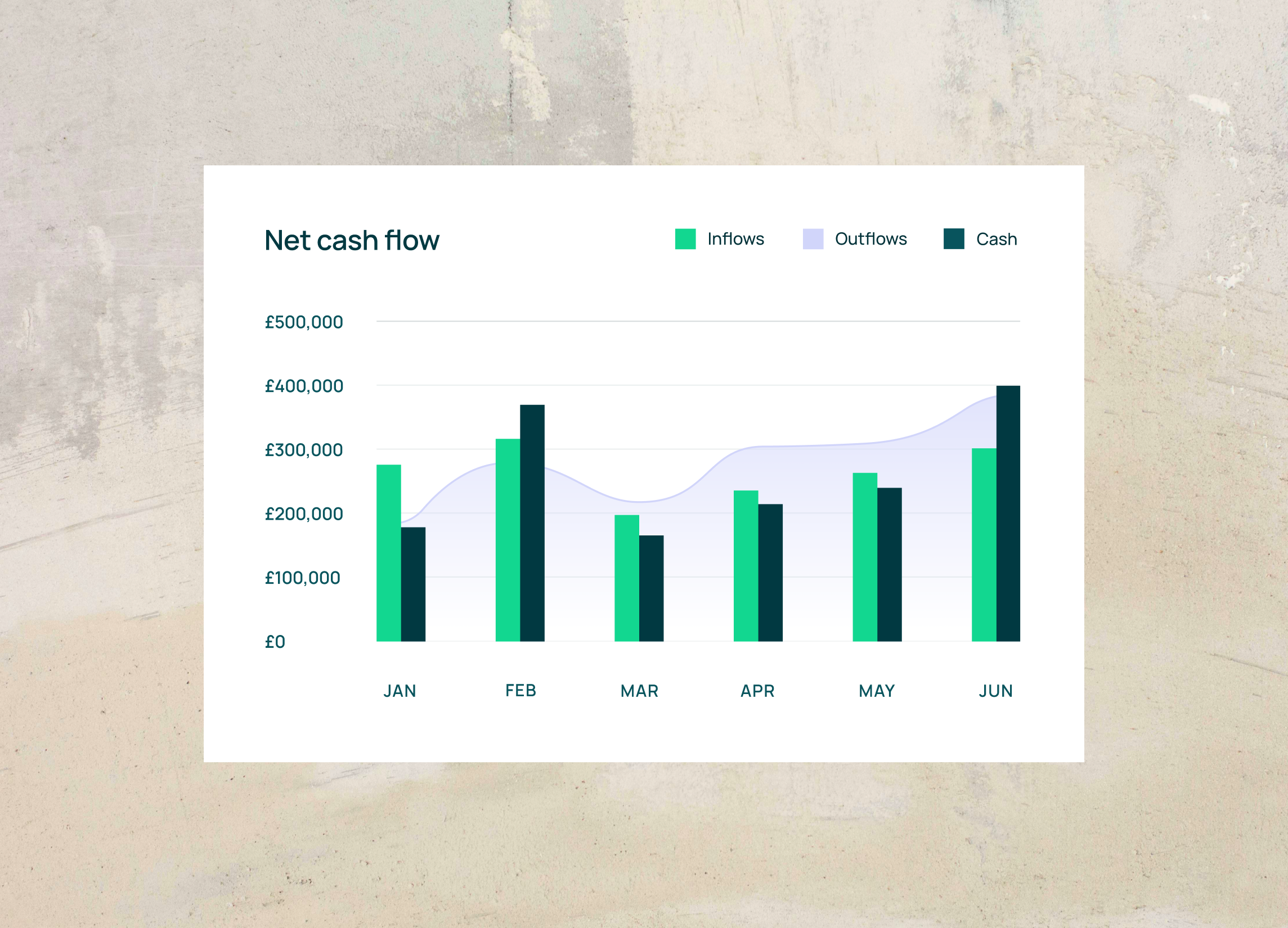
Ironically, strong marketing often creates the biggest financial pressure.
When sales increase rapidly:
- Inventory demand spikes
- Marketing spend scales
- Fulfilment costs increase
- Payment delays grow (especially with retail and wholesale distribution)
The result is the classic growth paradox: revenue rises, cash disappears.
Scaling consumer brands come with further challenges around data complexity and under-resourced teams. So while marketing can quickly accelerate growth, finance determines whether the company can sustain it.
The brands that avoid this problem sorted their cash conversion cycle before they started scaling hard, not as a reaction to it. If you're planning an aggressive Q4 push, the time to sort supplier terms and working capital is Q2. The brand that negotiates favourable payment terms and achieves a negative cash conversion cycle, where customers pay before suppliers need paying, can scale paid media aggressively without financial anxiety. Customers are effectively pre-funding their own acquisition. That changes the entire risk profile of scaling spend.
The metrics where finance and marketing actually meet
When high-performing brands align these teams, they focus on a small set of shared metrics. Not vanity metrics, economic ones.
1. Contribution margin per order
This is where finance and marketing first connect. Contribution margin accounts for COGS, fulfilment, payment fees, and marketing spend. It shows the true profit generated per order.
If this number is negative, scaling ads only accelerates losses.
2. Payback period (CAC recovery)
Customer acquisition is rarely profitable on the first purchase. That's normal. What matters is how quickly CAC is recovered.
For example:
- CAC: £50
- First purchase profit: £20
- Second purchase profit: £20
- Third purchase profit: £20
Your CAC payback occurs after the third purchase. Finance wants this timeline clearly modelled. Marketing should optimise campaigns around shortening it.
Whether first-order profitability matters depends on capitalisation. A well-funded brand with strong LTV data can operate comfortably at a 90-day payback. A bootstrapped brand needs to be much closer to break-even on the first order, because they simply can't carry the working capital gap.
What most brands get wrong is treating payback period as a media problem. It isn't. You can't media-buy your way to a shorter payback period. You have to engineer it through product mix, post-purchase flows, and offer strategy. The media team's job is to acquire customers into the best LTV cohorts. The business's job is to make those cohorts worth acquiring.
3. Cash conversion cycle
Marketing drives demand. Finance tracks how long it takes to convert that demand back into cash. The cash conversion cycle measures the time between spending money and getting it back.
A long cash conversion cycle means your business is locking cash inside inventory and receivables. Shortening it, and even getting into a negative cash conversion cycle, can be more powerful than increasing sales.
Long CCC: supplier payment, inventory sits, customer payment. Cash out before cash in.
Negative CCC: customer payment, inventory sits, supplier payment. Cash in before cash out.
A long cash conversion cycle means you pay for growth before it happens. A negative cash conversion cycle means customers pay for growth before you do.
"Growth puts pressure on cash before it creates profit. The goal for brands should be to shorten their cash conversion cycle as much as possible, so growth is never limited by cash flow." - Frank Martin, Triffin
4. Blended CAC across channels
Many brands analyse channels individually: Meta CAC, Google CAC, influencer CAC. Finance cares about blended CAC across the entire system. Cash doesn't care where customers came from, only whether the total acquisition cost is sustainable.
Blended CAC also obscures incrementality. A reported £35 blended CAC can look efficient until you account for the branded search, direct traffic, and email conversions that would have happened regardless of paid spend. Strip those out and the true cost of a genuinely new customer is often 40 to 60% higher than the headline figure. The right question isn't what's our blended CAC. It's what's our incremental CAC.
The real advantage: Financially-literate marketing
The next generation of consumer brands are changing how teams operate. Marketing teams increasingly think like operators. They ask questions like:
- What CAC can we afford based on margin and customer repeat order behaviour?
- How does inventory constrain growth?
- What happens to cash flow if we double ad spend?
Meanwhile finance teams now work closer to growth teams, modelling campaigns before they launch. The result is a powerful shift: marketing decisions become financial decisions. And financial decisions become growth decisions.
There's one question that connects all of it, and most brands never ask it directly: what is the maximum CAC our unit economics can support at current gross margin and LTV? Answer that and you have a bidding strategy. You know how hard to push in the auction, which products to scale, and when to protect margin instead. That single number converts margin data into an actionable media strategy.
Which brings us to the reframe that changes how the best operators think about growth.
"The goal isn't to drive CAC as low as possible. The goal is to build a business that can afford the highest CAC possible. We're in an auction. The brand that can afford to pay the most for a customer wins. Chasing a lower CAC is a race to the bottom. Building the margin structure to afford a higher one is a growth strategy." - Will Tickle, Social Nucleus
If this resonates with how you're thinking about your brand's growth book a call with the Social Nucleus team here.
As spend scales, CAC rises. It always does. The brands that keep growing aren't the ones who found a way to keep CAC artificially low. They're the ones whose economics evolved to support the CAC their market demands at the next level of spend. That's a finance problem before it's ever a marketing one.
The brands that become outlier success stories
The brands that scale from £2M to £50M and beyond share one common trait: they don't treat finance as reporting. They treat it as a growth engine. They connect marketing data with financial data to answer questions like:
- Which products generate the most cash?
- Which channels create repeat customers fastest?
- When should we scale spend, and when should we slow down?
Because the real goal isn't just revenue. It's profitable, sustainable growth. And that only happens where finance meets marketing.
If you'd like to make finance a growth engine for your brand, get in touch with the Triffin team here.
Final thought
Most consumer brands try to grow through marketing alone. The strongest brands grow through financial insight. When marketing and finance operate from the same numbers, something powerful happens.
Decisions get faster. Risk gets lower. Growth gets smarter. Your business becomes an outlier.