



Breakout Wellness UK is Growth Studio's eight-week accelerator for wellness founders getting ready for mainstream retail. A first big retail listing is a milestone, and it also changes how long your cash stays tied up in stock and unpaid invoices. This is the essence of your cash conversion cycle.
Why profit isn't cash
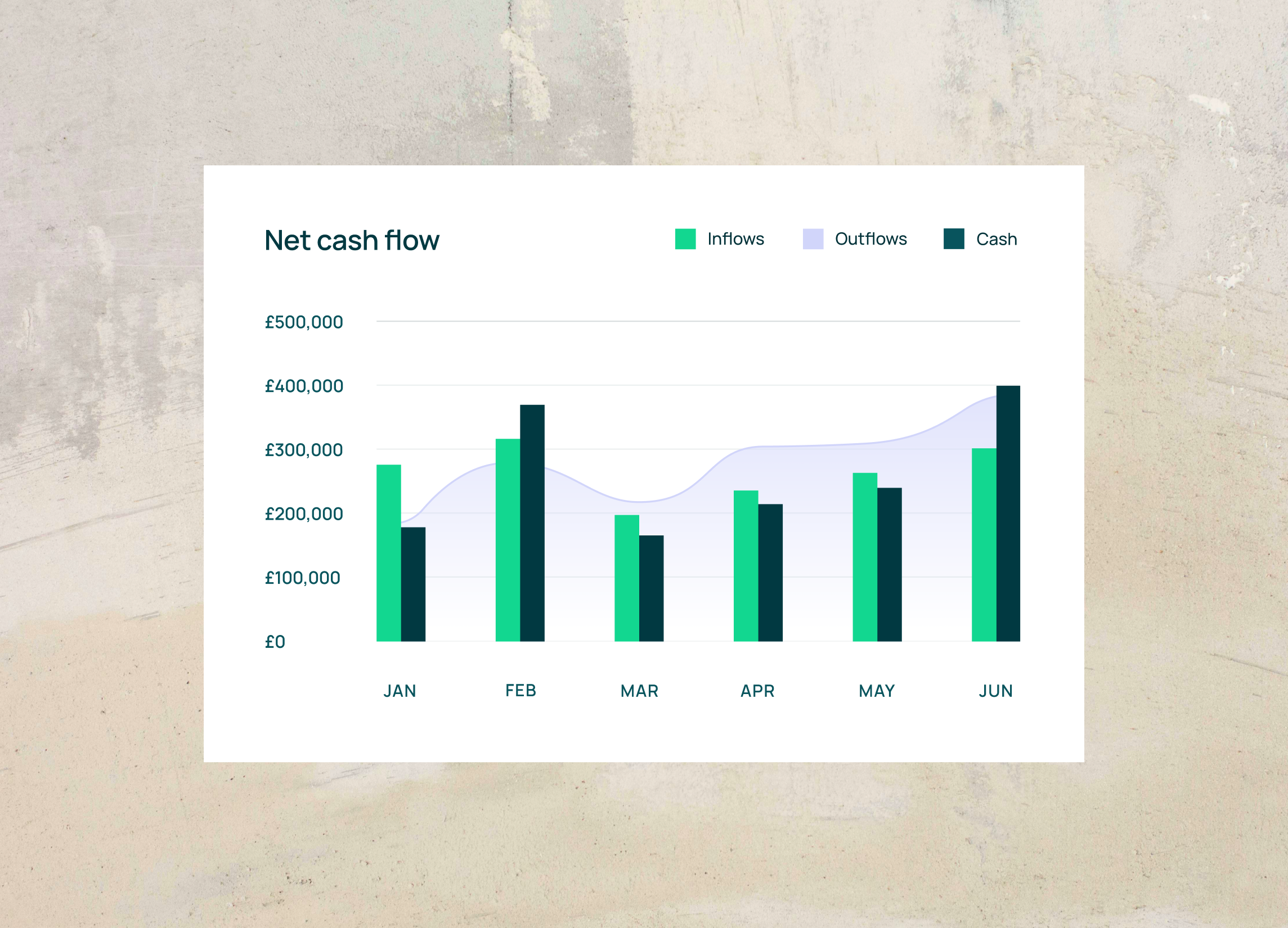
Michael presented a case study of a UK gut health company selling through DTC, wholesale and marketplaces. A profitable and growing business, yet its 13-week cash forecast showed a negative £350k balance.
While the company was reporting profits in their P&L, the negative cash balance was driven from the up front cost of inventory required for the retail order, and the time before they’d actually get paid.
In this case a total cash conversion cycle of ~7 months. For businesses tight on cash, that’s a long time.
What is the cash conversion cycle?
The cash conversion cycle measures how many days your cash is tied up between paying for stock and getting paid for from sales. It adds the days stock sits before it sells to the days customers take to pay, then takes away the days you take to pay suppliers. A shorter cycle means you need less cash to support the same level of sales.
How do you calculate the cash conversion cycle?
You need three data points. Each uses an average from your balance sheet (opening balance plus closing balance, divided by two) and trailing 12-month figures from your P&L.
Cash conversion cycle = receivable days + inventory days − payable days.
Why a retail listing lengthens your cash conversion cycle
Stock for a large retail order is usually paid for months before it sells. In the case study example, a deposit goes to the supplier, production takes eight weeks, the balance is paid on shipment, freight takes six weeks at sea, and the stock takes eight weeks to sell. The retailer then pays 60 days later. That adds up to around seven months between the first payment and the first pound coming back.
Channel mix matters too. DTC pays within days and Amazon roughly every 14 days. Wholesale accounts tend to pay in 30 to 60 days, and big retailers in 60 to 120 days, less deductions. A first major listing pushes inventory days and receivable days up at the same time.
Three ways to shorten the cash conversion cycle
Every part of the formula is something a founder can change.
Higher payable days
Negotiate longer payment terms with your suppliers. When a supplier asks for a deposit upfront or the full balance on dispatch, you can fund the purchase order so the supplier is paid on time and you repay it later. That is how inventory finance works. With a Triffin credit facility, you can fund 100% of your inventory and supply chain costs.
Lower inventory days
Order more of what actually sells. Review sell-through and expiry dates with your ops team. Slow- moving stock drains your cash, and writing it down later hits profit too, so focus on your best sellers.
Lower receivable days
Seek better payment terms with retailers and wholesalers and be pro-active in regard to getting paid on time. Waiting is expensive. The QuickBooks 2025 Small Business Late Payments Report found that UK small firms with unpaid invoices were owed £21.4k on average.
Invoice finance can be an effective option to receive cash sooner. With Triffin credit you can get instant payment on 100% of the value of retail/wholesale sales invoices, unlike more traditional invoice factoring which typically pays 90% of the value.
How does working capital finance shorten the cash conversion cycle?
Working capital finance shortens the cash conversion cycle by extending when you need to pay suppliers, or shortening when retail or wholesale customers pay you.
In other words, you can sell products before actually paying for them, meaning you can grow your business in a very capital efficient way.
Equity or working capital finance: which should you use?
Michael's rule of thumb was equity for growth and working capital finance to shorten the cash conversion cycle.
Equity suits spending that takes years to pay back, such as hiring a team, developing new products and expanding into new markets. Working capital finance suits stock, receivables and supplier payments, where you can see the cash coming back to repay it.
Profitability matters too. A company that is profitable, or close to it, can usually take on working capital finance, while one burning a lot of cash usually needs equity. Our debt vs equity guide goes deeper on the trade-offs.
Key takeaways from the session
Calculate your own cash conversion cycle and find its weakest part. Use supplier terms, retailer terms and product range reviews to shorten it. Then match the funding to the job: equity for long-term growth, and working capital finance for stock and invoices when you can see the cash coming back.
If a retail order or a growing stock bill is stretching your cycle, Triffin's inventory finance pays your supplier now and lets you repay over one to six months, with interest only on what you draw. You can apply online to see what's available.
Funding is subject to eligibility, credit checks and approval. Capital provided by Triffin Capital Limited.